


Cinema does something strange to food. A single close-up shot of a chocolate cake, a steaming pie, or a towering sundae can make an entire audience simultaneously ravenous. Desserts, in particular, hold a strange power on screen. They signal celebration, danger, nostalgia, childhood — sometimes all at once.
Some sweets become more famous than the films themselves. That’s not an accident.
The Numbers Behind the Magic
Food appears in roughly 70% of all Hollywood films in some form. But desserts get special treatment — they almost always signal a turning point. A birthday cake means something is about to change. A shared cookie hints at trust being built. Candy, almost universally, represents innocence about to be lost.
Studies in food psychology confirm that watching others eat sweet food on screen triggers genuine salivary and emotional responses in viewers. The brain doesn’t fully distinguish between seeing and tasting. That’s a lot of power for a slice of pie.
The Chocolate Factory and Its Legacy
No conversation about movie sweets starts anywhere other than Charlie and the Chocolate Factory. The 1971 original and the 2005 Tim Burton remake both center entirely on candy as world-building material. Wonka’s Everlasting Gobstoppers, lickable wallpaper, edible teacups — the film is a catalogue of impossible confections.
What’s remarkable is that the sweets aren’t just set dressing. They are the plot. Each candy reveals character, tests morality, and delivers consequences.
Ratatouille‘s Crème Brûlée Moment
Pixar’s Ratatouille (2007) features one of the most emotionally devastating desert scenes in film history. The critic Anton Ego, a cold and feared man, takes one bite of the humble titular dish — but it’s the memory it unlocks that matters. A spoonful of food sends him back to childhood, to his mother’s kitchen, to safety.
That’s not about ratatouille. That’s about how taste carries memory. The scene made food writers cry. Actual food writers. At a cartoon.
Amélie and the Sugar Crust
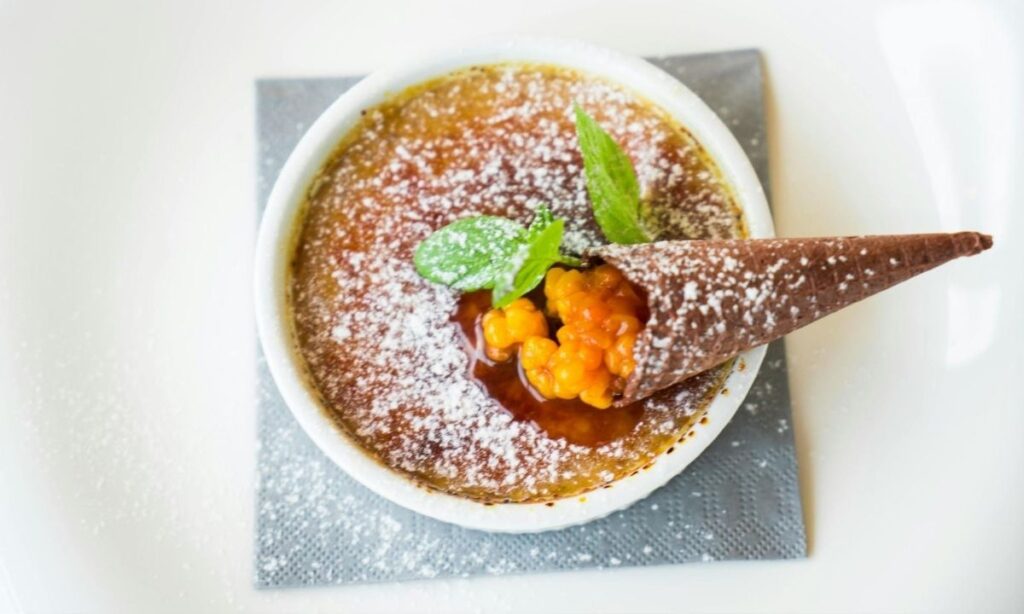
The French film Amélie (2001) opens with a defining act: a young girl tapping the caramelized crust of a crème brûlée with a spoon. It takes four seconds of screen time. It became iconic. The film’s director Jean-Pierre Jeunet later said that the small moment received more mail than almost anything else in the movie.
Speaking of Amélie, many viewers outside France had trouble accessing the film’s original French streaming releases. This connects to a broader issue in the digital world. VPN services have become important tools not just for privacy and cybersecurity protection, but for accessing content hosted in other countries. More and more people are turning to free VPN provider for their own security and online freedom. VeePN has apps for various devices and multiple fast servers in different countries.
Forrest Gump‘s Box of Chocolates
“Life is like a box of chocolates.” Everyone knows the line. Fewer people remember that in Forrest Gump (1994), chocolate is used as a metaphor for unpredictability — and for the particular American idea that randomness, not planning, defines a life. The box appears repeatedly. It travels. It is shared with strangers.
It became one of the most recognized food props in cinema history. Sales of assorted chocolate boxes reportedly spiked in the weeks following the film’s release.
The Wedding Cake in Beetlejuice
Tim Burton keeps appearing on this list because Tim Burton loves weird desserts. The wedding cake in Beetlejuice (1988) is grotesque, towering, and clearly inedible — which is entirely the point. It’s not food. It’s a threat wearing the costume of celebration. The frosting is too white. The proportions are wrong.
Burton uses desserts the way other directors use weapons.
Hook and the Imaginary Feast
In Steven Spielberg’s Hook (1991), Peter Pan has forgotten he can imagine food into existence. The Lost Boys sit at a long table with empty bowls. Then — slowly — color appears. The bowls fill. A spectacular, candy-colored feast materializes out of pure belief. Food fights follow immediately.
It’s one of the most purely joyful dessert sequences ever filmed. The sweets aren’t described; they’re experienced. That scene made an entire generation of children momentarily believe that imagination could feed you.
The Pie Eating Contest in Stand by Me
Not all movie desserts are glamorous. The pie-eating contest in Stand by Me (1986) — specifically the moment it goes catastrophically wrong — is one of the most viscerally uncomfortable food scenes in American cinema. But it belongs here. Because it captures something real: the way food becomes ritual, competition, humiliation, and memory all at once.
Great food scenes don’t always make you hungry. Sometimes they make you laugh, or wince, or feel twelve years old again.
Sugar, Memory, and the Screen
Why do dessert scenes hit differently than regular meal scenes? The answer is probably neurological. Sweet tastes are among the earliest and most emotionally encoded memories humans form. Films that deploy desserts well are reaching directly into the viewer’s limbic system — bypassing analysis and landing in feeling.
A slice of cake on screen is never just cake.
The Lasting Influence on Real Baking
The food industry tracks spikes in recipe searches that follow major film releases. After Chef (2014), chocolate lava cake searches increased by over 40% in the following month. After Julie & Julia (2009), boeuf bourguignon returned to American dinner tables in force. After Matilda (1996), the grotesque chocolate cake scene inspired countless deliberately ugly “Bruce Bogtrotter cakes” — now a minor baking genre on social media.
Desserts from movies don’t stay on screen. They migrate into real kitchens, real bakeries, real memories.
Final Thoughts
The greatest movie sweets are never really about sugar. They are about longing, about childhood, about reward and punishment and the specific vulnerability of wanting something sweet. Cinema understands this instinctively — which is why a single frame of a well-lit slice of cake can stop a scene cold and hold an audience completely still.
Pass the crème brûlée.
