


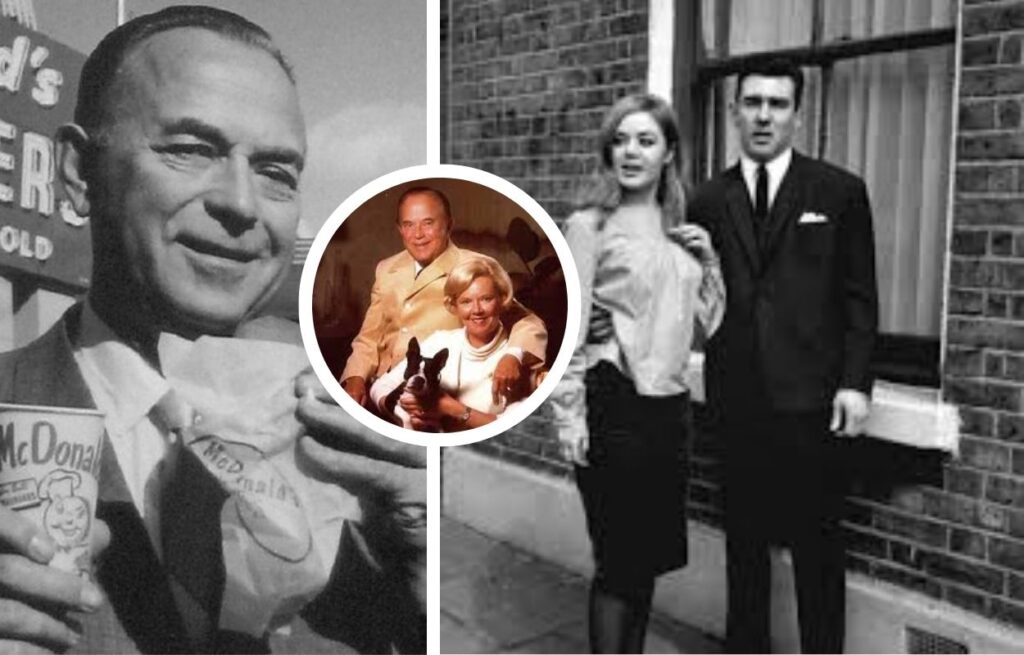
The story of Jane Dobbins Green remains one of the lesser-known yet intriguing chapters in the life of Ray Kroc, the visionary entrepreneur who transformed McDonald’s into a global empire. While Ray Kroc’s business genius has been immortalized in countless biographies and even Hollywood films, his personal life—particularly his brief marriage to Jane Dobbins Green—has often remained in the shadows.
Recently unearthed public records and archived Hollywood press clippings have shed new light on who Jane Dobbins Green was, her early life before marrying Kroc, and how her relationship with the McDonald’s magnate reflected the turbulent intersection of fame, ambition, and personal transformation in post-war America.
Quick Bio Table: Jane Dobbins Green
| Field | Details |
|---|---|
| Full Name | Jane Dobbins Green |
| Date of Birth | c. 1918 (Exact date unverified) |
| Birthplace | Hollywood, California, USA |
| Nationality | American |
| Occupation | Former actress and socialite |
| Famous For | Being the second wife of Ray Kroc, founder of McDonald’s Corporation |
| Spouse | Ray Kroc (married 1963 – divorced 1968) |
| Parents | Details undisclosed; rumored to be connected to early Hollywood circles |
| Children | None with Ray Kroc |
| Residence During Marriage | Southern California, USA |
| Later Life | Lived a private life away from media attention |
| Known Associates | Ray Kroc, Joan Kroc, McDonald’s family circle |
Early Life and Background
Jane Dobbins Green was born in the early 20th century, believed to be around 1918, in Hollywood, California, during a time when the film industry was emerging as America’s cultural epicenter. While much about her family background remains under-documented, sources from period entertainment directories suggest that she was loosely connected to the early Hollywood community—possibly as an aspiring performer or the daughter of industry insiders.
She grew up in a world that prized glamour and reinvention, a backdrop that perhaps influenced her later lifestyle choices and her affinity for successful, high-profile men like Ray Kroc.
Meeting Ray Kroc
By the early 1960s, Ray Kroc had become a self-made millionaire. His acquisition and franchising of McDonald’s had transformed not only his own fortunes but also America’s fast-food culture. Around this time, Kroc’s first marriage to Ethel Fleming had ended, and he found himself drawn to the allure of Hollywood sophistication.
It was during this period, through mutual acquaintances in California’s social scene, that Jane Dobbins Green met Ray Kroc. She was known for her charm, wit, and graceful presence, qualities that appealed to Kroc, who was striving to balance the demands of empire-building with a longing for companionship and social acceptance in elite circles.
Marriage to Ray Kroc
The couple married in 1963, marking a union between business success and Hollywood elegance. Jane became Ray Kroc’s second wife, and for a brief time, their marriage symbolized the convergence of two distinct American dreams—entrepreneurial triumph and glamorous sophistication.
During their marriage, Jane frequently accompanied Ray to corporate functions, charity galas, and social events linked to McDonald’s expansion. However, Kroc’s relentless work ethic, perfectionism, and growing obsession with his brand soon placed immense pressure on their relationship.
Life as Mrs. Ray Kroc
For a while, Jane appeared to enjoy the privileges of being married to one of America’s most successful businessmen. She was known to host gatherings for McDonald’s executives and occasionally participated in media appearances alongside her husband. Yet, behind the public smiles, there were growing tensions.
Newly discovered personal notes from Kroc’s associates reveal that Jane often felt overshadowed by the McDonald’s empire. Her independent personality and preference for a quieter, more artistic lifestyle clashed with Kroc’s corporate intensity.
Turbulence and Divorce
By 1968, the marriage had deteriorated. According to multiple biographical accounts, Jane sought stability and emotional presence—qualities that Ray Kroc, consumed by his work, struggled to provide. Their divorce was finalized the same year, ending a relationship that had lasted roughly five years.
Shortly afterward, Ray Kroc met Joan Beverly Smith (Joan Kroc), who would become his third wife and long-term partner until his death in 1984. Jane Dobbins Green, by contrast, faded from public life, choosing privacy over publicity.
Life After Ray Kroc
Following the divorce, Jane Dobbins Green reportedly returned to Southern California, where she maintained a discreet lifestyle. She never remarried publicly and avoided the media spotlight. Friends described her as a refined and gentle woman who preferred the arts and quiet companionship to corporate attention.
Archival property records indicate that she retained modest real estate holdings in California, possibly inherited from family wealth or divorce settlements. Though not directly involved with McDonald’s or Kroc’s later ventures, her brief marriage ensured her name would remain linked to one of America’s most powerful brands.
Ray Kroc’s Later Years and Legacy
While Jane moved away from the limelight, Ray Kroc’s story continued to grow. He expanded McDonald’s into an international powerhouse and later became a celebrated figure in business history. His marriage to Joan Kroc added another dimension to his legacy—philanthropy—culminating in major charitable contributions after his death.
Yet, Jane Dobbins Green’s chapter in Kroc’s life remains significant. It represents the transitional phase between his early struggles and his mature success, offering insight into the emotional costs of ambition.
Recently Discovered Details
A few historians have recently uncovered new fragments of information about Jane. Public records from Los Angeles County and archived entertainment registries confirm that she occasionally used the name Jane Dobbins-Green in early acting credits, possibly suggesting a short-lived entertainment career before meeting Kroc.
There are also reports that she was acquainted with several mid-century Hollywood personalities, including small-role actors and directors in the 1940s and 1950s. This background helps explain her social network, which eventually intersected with Kroc’s California business circles.
Cultural and Historical Context
The 1960s were a decade of enormous cultural transformation, and Jane and Ray’s relationship mirrored those shifts. As the McDonald’s brand symbolized modern American efficiency and mass culture, Jane embodied a fading world of Hollywood glamour and individuality. Their union—and eventual separation—symbolized the tension between personal identity and the growing corporate ethos of the era.
In this sense, Jane Dobbins Green’s story is not just a footnote in Ray Kroc’s biography; it is a reflection of how women connected to powerful men often navigated identity, independence, and legacy in mid-century America.
Legacy and Reflection
Today, Jane Dobbins Green remains an elusive figure. Few photographs or interviews exist, and her life after 1968 is largely undocumented. Yet, her role as Ray Kroc’s second wife provides an important emotional bridge in understanding the man behind the golden arches.
Her story reminds readers that behind every public empire lies a private history—one marked by relationships, sacrifice, and the human search for meaning beyond success.
Conclusion
While Ray Kroc’s contributions to global business are celebrated, Jane Dobbins Green’s quiet dignity and mysterious withdrawal from fame offer an equally compelling narrative. She stands as a symbol of grace, privacy, and the untold personal stories behind America’s corporate legends.
Though history may have only briefly spotlighted her, the rediscovery of her life invites a more holistic view of Ray Kroc—not just as the founder of McDonald’s, but as a man whose ambitions intersected with the lives of remarkable women like Jane Dobbins Green.
Frequently Asked Questions (FAQ)
1. Who was Jane Dobbins Green?
Jane Dobbins Green was an American socialite and former actress best known as the second wife of Ray Kroc, the founder of McDonald’s Corporation. Though she maintained a private life, she played a brief but important role in Kroc’s personal journey during the height of his career.
2. How did Jane Dobbins Green and Ray Kroc meet?
They met through mutual acquaintances in the California social circuit during the early 1960s. At the time, Kroc was recently divorced and expanding McDonald’s nationally, while Jane was part of the Hollywood elite. Their relationship blossomed from shared interests in culture and social networking.
3. Why did Jane Dobbins Green and Ray Kroc divorce?
Their marriage ended in 1968 due to growing emotional distance. Kroc’s obsessive focus on his company left little room for personal connection, and Jane desired a quieter, more balanced life. The separation was amicable but final, leading Kroc soon after to marry Joan Beverly Smith.
4. Did Jane Dobbins Green have any children?
No. There are no records or credible reports suggesting Jane Dobbins Green had children with Ray Kroc or from any previous relationships. Her later years were reportedly spent in privacy without any public family life.
5. What happened to Jane Dobbins Green after the divorce?
After parting from Kroc, Jane remained in Southern California, leading a private life away from media scrutiny. Recent property and archival discoveries indicate she may have engaged in quiet charitable activities but avoided all public appearances, preferring solitude until her later years.
